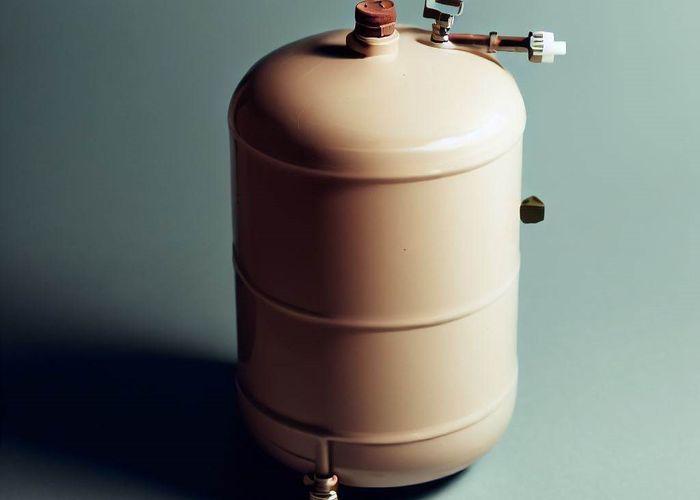
If you've ever noticed your water heater's temperature and pressure relief valve dripping, or heard a knocking in your pipes right after the heater runs, the fix might be a small metal canister mounted near the tank called a thermal expansion tank. Increasingly required by plumbing codes, expansion tanks solve a problem that many homeowners don't even know they have. Here's what they do and why they matter.
The Problem: Thermal Expansion
Water expands when it's heated. When your water heater warms a tank of cold water, that water increases in volume — a 50-gallon tank can produce roughly half a gallon of extra volume as it heats. In an "open" plumbing system, that extra water could simply push back into the municipal supply. But most modern homes have a closed system, thanks to a check valve, backflow preventer, or pressure-reducing valve on the incoming line. In a closed system, the expanding water has nowhere to go.
Why That's a Problem
With no room to expand, the trapped water causes pressure inside your plumbing to spike sharply every time the heater runs. This excess pressure stresses your pipes, fittings, faucets, and the water heater itself. It commonly shows up as a T&P relief valve that weeps or discharges, banging pipes, dripping faucets, and shortened appliance life. Over time, repeated pressure spikes can damage the tank and plumbing.
Our Top Picks

Amtrol ST-5 Thermal Expansion Tank
The industry-standard 2-gallon thermal expansion tank — Amtrol invented the category, and the ST-5 is the right size for most residential 40–50 gallon water heaters.
Final Editorial Verdict
The Solution: An Expansion Tank
A thermal expansion tank is a small tank — often 2 to 5 gallons — plumbed into the cold water line near the water heater. Inside, a rubber diaphragm separates a water side from an air side that's pre-charged with compressed air. When heated water expands and pressure rises, the extra water pushes into the expansion tank, compressing the air cushion and absorbing the increase. When you draw hot water and pressure drops, the air pushes that water back into the system. In effect, the expansion tank gives the extra volume somewhere to go, keeping your system pressure stable.
Do You Need One?
You need an expansion tank if you have a closed plumbing system — which you do if there's a pressure-reducing valve, check valve, or backflow preventer on your main water line. Many local codes now require one on new water heater installations. Telltale signs you need one include a T&P valve that periodically discharges water for no obvious reason, or pressure fluctuations and knocking after the heater cycles.
Installation and Maintenance Notes
The expansion tank must be sized to your water heater's capacity and your home's water pressure, and its air pre-charge should be set to match your incoming water pressure (commonly 40–60 psi). It's typically installed on the cold supply line above or beside the heater. Like any pressurized tank, the diaphragm can eventually fail; a waterlogged expansion tank (one that feels completely full and heavy, or has water coming from the air valve) no longer cushions pressure and should be replaced.
Conclusion
A thermal expansion tank is a small, inexpensive device that protects your entire plumbing system from the pressure spikes caused by heating water in a closed system. If your relief valve drips or your pipes knock after the heater runs — and especially if you have a pressure-reducing valve or backflow preventer — an expansion tank is likely the fix, and in many areas it's now required by code.